Passage 1
|
Passage 2
|
Passage 3
|
Passage 4
|
Passage 5
|
| Passage 6
|
Passage 7
|
Passage 8
|
Passage 9
|
Passage 10
|
| Passage 11
|
Passage 12
|
Passage 13
|
Passage 14
|
Passage 15
|
| Passage 16
|
Passage 17
|
Passage 18
|
Passage 19
|
Passage 20
|
| Passage 21
|
Passage 22
|
Passage 23
|
Passage 24
|
Passage 25
|
| Passage 26
|
Passage 27
|
Passage 28
|
Passage 29
|
Passage 30
|
| Passage 31
|
Passage 32
|
Passage 33
|
Passage 34
|
Passage 35
|
| Passage 36
|
Passage 37
|
Passage 38
|
Passage 39
|
Passage 40
|
| Passage 41
|
Passage 42
|
Passage 43
|
Passage 44
|
Passage 45
|
| Passage 46
|
Passage 47
|
Passage 48
|
Passage 49
|
Passage 50
|
4 – Digit Numbers |
|
|
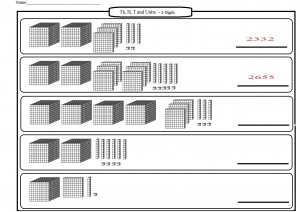
Thousands, Hundreds, Tens and Units – 4 Digits (Blocks):
Thousands, Hundreds, Tens and Units. |
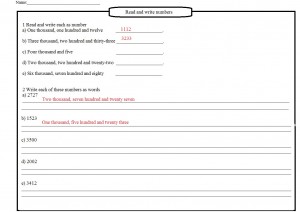
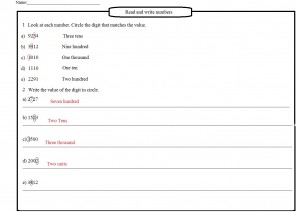
Reading and Writing Numbers – 4 Digits:
Set 1 – Writing from words to numbers and from numbers to words. Click here for Set 1
|
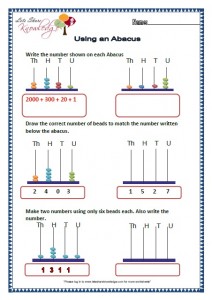
| Using an Abacus for 4 Digits:
Writing the numbers shown on each abacus. |
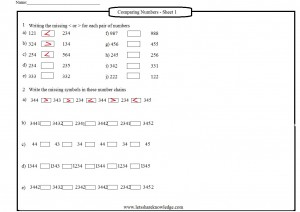
Comparing Numbers:
Comparing Numbers using sign “<” or “>”
|
4 – Digit Numbers |
|
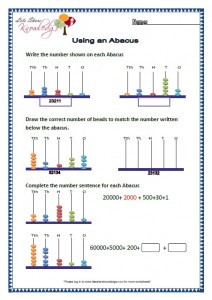
| Using an Abacus for 5 Digit Numbers
Writing numbers shown on abacus and how to place beads on an abacus to represent numbers. |
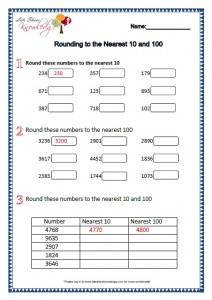
Rounding to the nearest 10 and 100:
Rounding off numbers to nearest 10 for example 183 would be 180 and rounding off to the nearest 100 where 183 would be 200. |
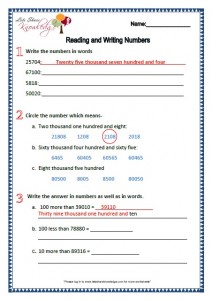
| Reading and Writing Numbers 5 Digits:
Reading and writing numbers in words. |
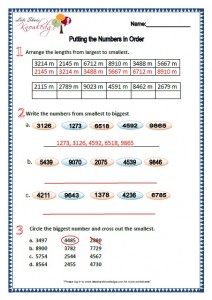
Putting Numbers in Order
Putting the numbers smallest to largest |
| Place Value: 5 Digit Numbers: Placing values of 5 digit numbers. Like in 23467 the number 3’s value would be 3 thousand.  Click here |
|
Addition |
|
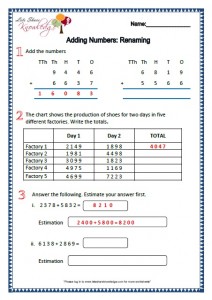
| Adding Numbers Renaming
Renaming of number means using Units, Tens Hundreds, Thousands and so on for addition purpose. |
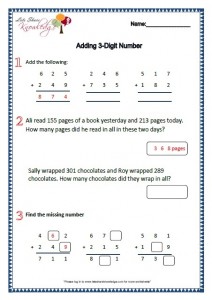
Adding 3 Digit Number
No renaming means not using Units, Tens, Hundreds and so on for addition. |
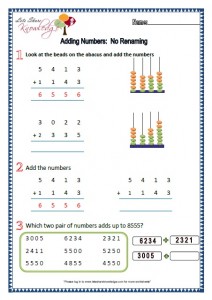
| Adding 4 Digit Numbers: No Renaming
No renaming means not using Units, Tens, Hundreds and so on for addition. |
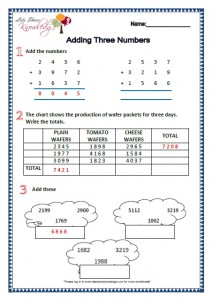
Adding 3 Numbers
Adding 3 numbers would be |
Subtraction |
|
| Subtracting 4 Digit Numbers: No Renaming: Crossing out beads on the given abacus, subtracting the numbers and writing the difference between the given two numbers. 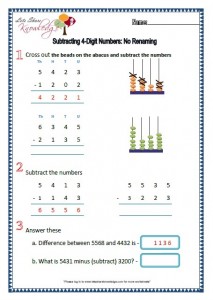 Click here Click here |
Subtracting 3 Digits Numbers: With Exchange: Subtracting the given numbers, Writing which two numbers have a differnce of the given number in question and filling in the blanks with numbers 1, 2, 3, 4 or 5. 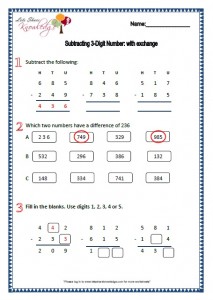 Click here Click here |
| Subtracting 4 Digits Numbers: Renaming: Subtracting the given numbers, solving the problems and writing the difference of given numbers. 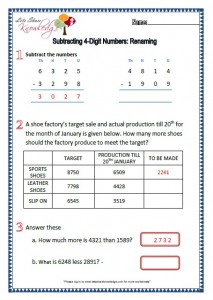 Click here Click here |
|
Properties and Patterns of Numbers Worksheets |
|
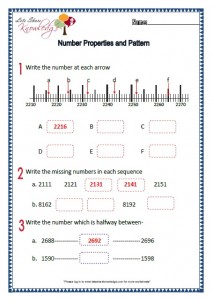
| Number Properties and Pattern: Writing the numbers given on the scale which are ointed by an arrow, writing the missing numbers in sequence and writing the numbers which are halfway between the two numbers.
|
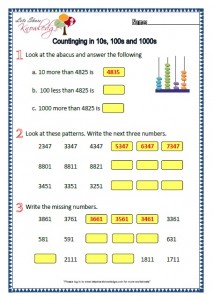
Counting 10’s, 100’s and 1000’s: Looking at the abacus and stating the addition or subtractions of 10’s, 100’s or 1000’s, then writng the next three numbers in a given pattern and lastly writing the missing numbers based on a sequence.
|
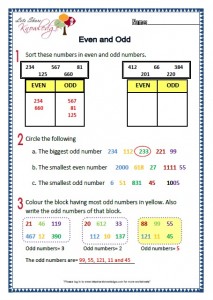
| Even and Odd: Sorting out the even and odd numbers. Circling the smallest or biggest even or odd numbers and colouring the blocks yellow having most of either even or odd.
|
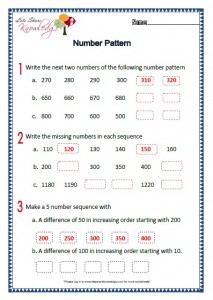
Number Pattern: Writing the next two numbers in the given number pattern.Writing the missing numbers in each sequences and making a 5 number sequence.
|
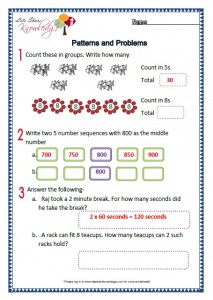
| Patterns and Problems: Counting in groups and writing
|
|
Time Worksheets |
|
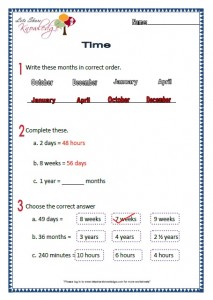
| Time: Writing the months in order, completing questions and choosing the correct answers based on minutes, hours, days, weeks, months and years.
|
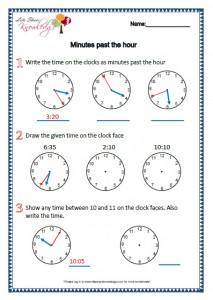
Minutes Past Hour: Writing the time on the clocks as minutes past the hour. Drawing the given time on the clock face and showing the time on the clock faces.
|
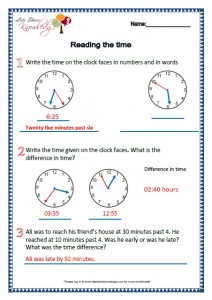
| Reading the Time: Write the time on the clock faces in numbers and in words. Write the time given on the clock faces. What is the difference in time? Time problems.
|
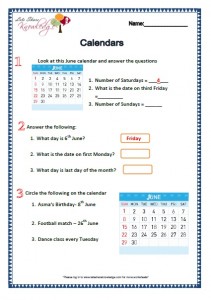
Calendars: Answering questions by looking at the Calendars.
|
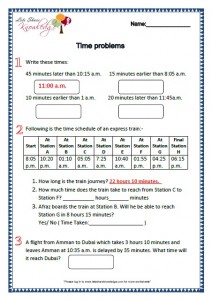
| Time Problems: Writing timings, answering questions based on time schedule given and solving problems based on time.
|
|
Multiplication Worksheets |
|
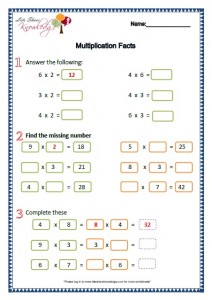
| Multiplication Facts: Random questions based on multiplication.
|
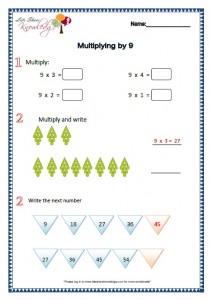
Multiplying by 9: Practice questions on multiplication by 9.
|
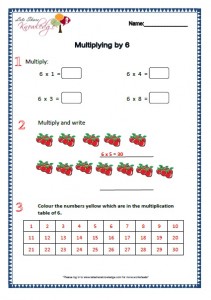
| Multiplying by 6: Practice questions on multiplication by 6.
|
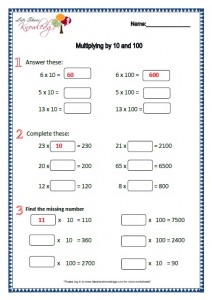
Multiplying by 10 and 100: Practice questions on multiplication by 10 and 100.
|
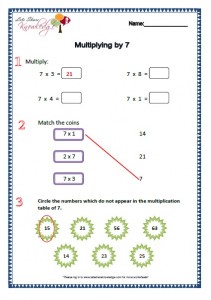
| Multiplying by 7: Practice questions on multiplication by 7.
|
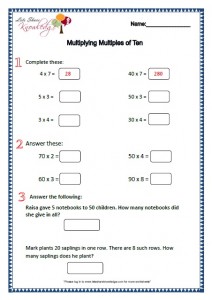
Multiplying Multiples of 10: Complete questions like 5 * 10 = 50, and word problems.
|
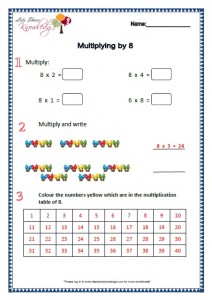
| Multiplying by 8: Practice questions on multiplication by 8.
|
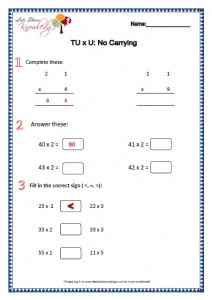
TU * U No carrying: Multiplication sums and Filling in the correct signs ( <, =, >).
|
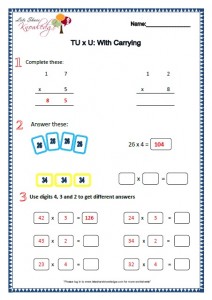
| TU * U with carrying: Multiplication and using different digits to get answers.
|
|
Division Worksheets |
|
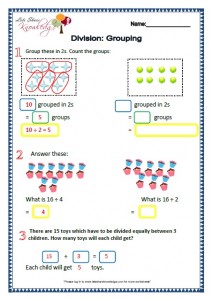
| Division: Grouping: Grouping into numbers given and word problems.
|
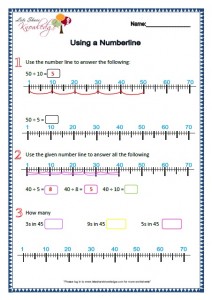
Numberlines: Using numberlines to answer questions.
|
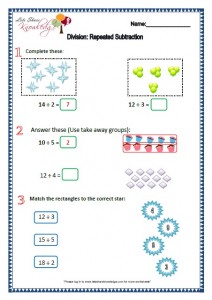
| Division: Repeated Subtraction: Solving questions based on division with repeated subtraction.
|
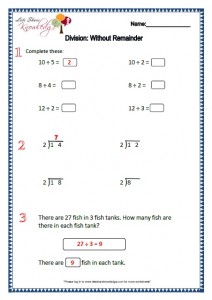
Division without remainder: Division sums without remainder like 10 divided by 5 equals 2 and few word problems.
|
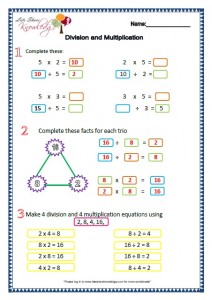
| Division and Multiplication: Questions based on multiplication and division.
|
|
Angles |
|
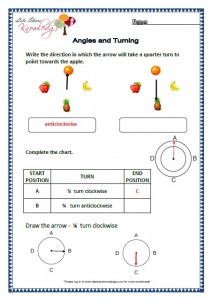
| Angles and Turnings: Writing directions in which the arrow will turn, clockwise or anti clockwise.
|
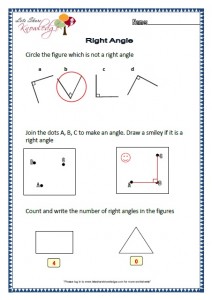
Right Angles: Questions based on understanding right angles.
|
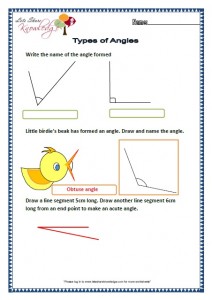
| Types of Angle: Writing the names of angles formed, telling what angle is the birdie’s beak showing and drawing line segments.
|
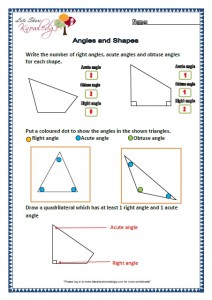
Angles and Shapes: Writing the names of angles formed, telling what angle is the birdie’s beak showing and drawing line segments.
|
Symmetry |
|
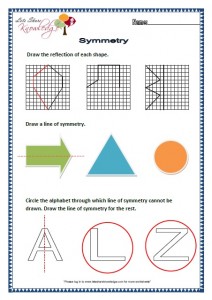
| Symmetry: These worksheets are about drawing the reflection of each shape, drawing lines of symmetry and circling the alphabets where the line of symmetry cannot and where it can be drawn.
|
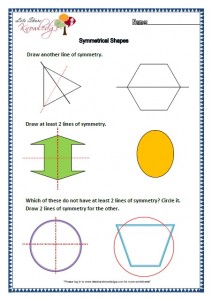
Symmetrical Shapes: These worksheets are about drawing another line of symmetry, drawing two lines of symmetry and telling Which of the shapes do not have at least 2 lines of symmetry? Circle it. Draw 2 lines of symmetry for the other.
|
Shapes |
|
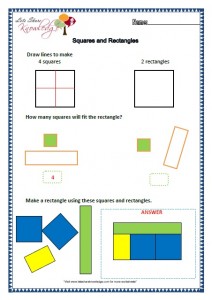
| Squares and Rectangles: These worksheets are about drawing squares and rectangles.
|
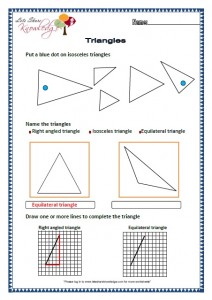
Triangles: These worksheets are based on different kinds of triangles, like isosceles, right angled etc.
|
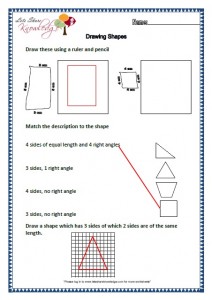
| Drawing Shapes: These worksheets are about drawing shapes based on given measurements.
|
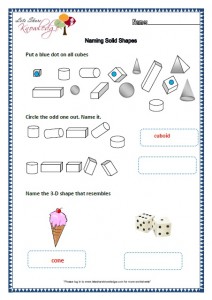
Naming Solid Shapes: These worksheets are about naming solid shapes like cone, cube, sphere etc.
|
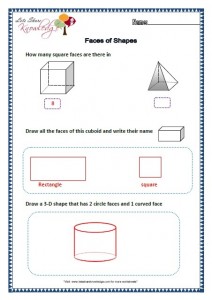
| Faces of Shapes: These worksheets are about identify how many faces does a shape has and questions related.
|
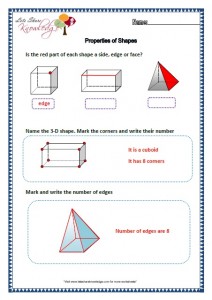
Properties of Shapes: These worksheets are about properties of shapes like knowing about an edge, side or a face.
|
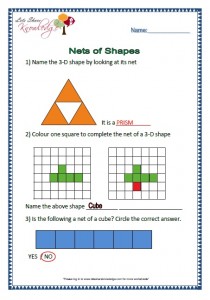
| Nets of Shapes: Naming the 3D shapes, colouring squares to complete the net of 3D shapes and answering if the given diagram is a net of a 3D shape.
|
|
Functions |
|
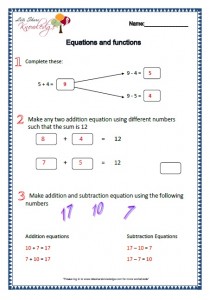
| Inverse Relations Addition and Subtraction: Completing the equations and making addition and subtraction equations.
|
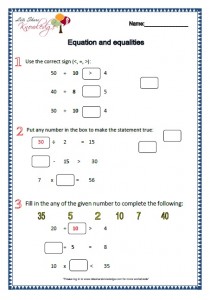
Equation and Equalities: Using the correct signs (<,=,>), putting numbers in the box to correct the statement and filling in the given numbers to complete the equations.
|
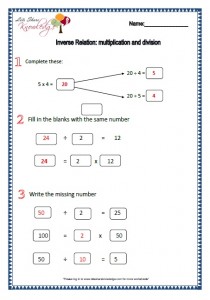
| Inverse Relation Multiply and Divide: Basic Multiplication and Division questions.
|
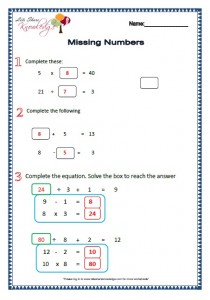
Missing Numbers: Completing the missing numbers. Solving the equations.
|
Measures |
|
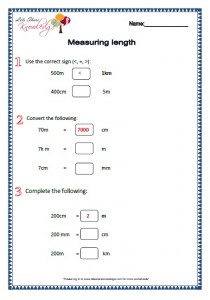
| Measuring Length: Using the correct sign (<,=,>), converting like from meters to centimeters
|
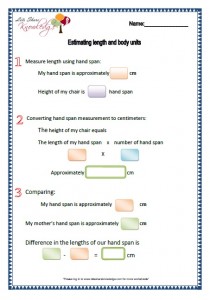
Estimating Length and body units: Measuring lengths using hand spans, converting measurement to centimeters and comparing the found out measurements.
|
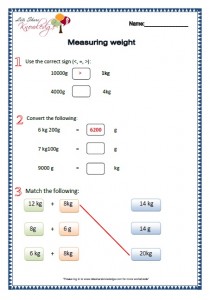
| Measuring Weights: Using the correct signs, converting like kg to grams and matching the given numbers.
|
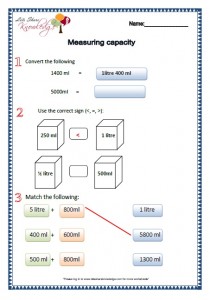
Measuring Capacity: Converting like litres to millilitres, choosing the correct sign (<,=,>) and matching.
|
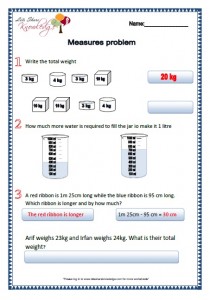
| Measuring Problems: Writing the total weight, questions on how much ml required and solving problems.
|
|
Perimeter and Area |
|
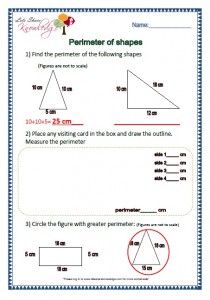
| Perimeter of Shapes: Finding the Perimeters of the shapes given. Drawing the shapes based on the measurements given. Answering which of the shapes have greater parameter.
|
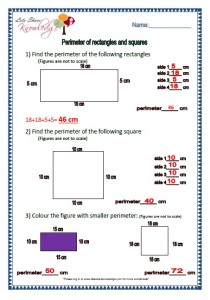
Perimeter of Rectangles and Squares: Finding the perimeters of the rectangles and squares. Colouring the parameter of the shapes that is asked.
|
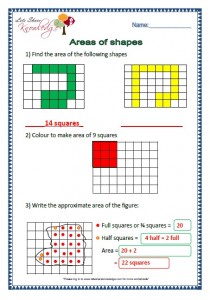
| Areas of Shapes: Finding the areas of the shapes given. Colouring to make areas as asked and writing the approximate areas of the figures.
|
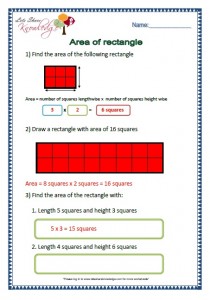
Area of Rectangles: Finding the areas of the rectangles given. Coloring the areas as asked, and finding the areas of the given measurements.
|
Fractions |
|
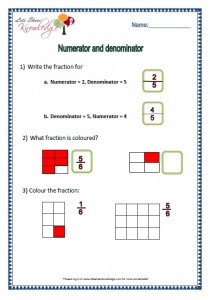
| Numerators and Denominators: Writing the fractions. Answering what fractions are coloured and colouring the fractions asked.
|
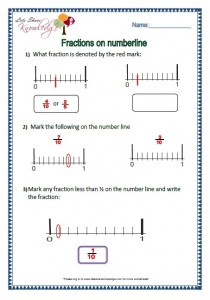
Fractions on Number Lines: Answering what fraction is the number line showing. Marking the fraction given.
|
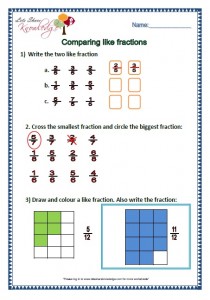
| Comparing Like Fractions: Writing the same fractions. Crossing the smallest and circling the biggest fraction. Drawing and colouring a like fraction.
|
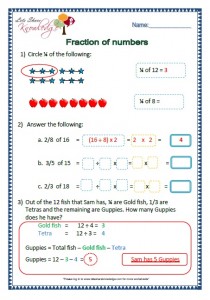
Fractions of Numbers: Circling based on fraction asked. Solving fractions and answering problems.
|
| Adding and Subtracting like Fractions: Adding, subtracting and matching the fractions.
|
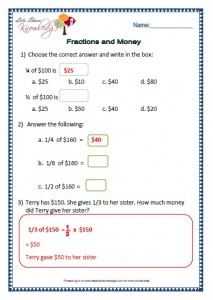
Fractions and Money:
|
Handling Data |
|
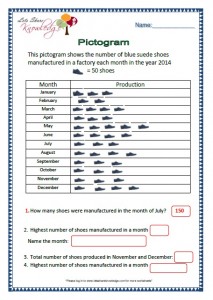
| Pictograms: Answer questions based on the pictogram given.
|
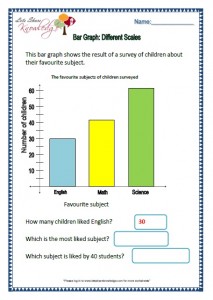
Bar Graphs Different Scales: Giving answers of the questions based on the bar graph given using different scales.
|
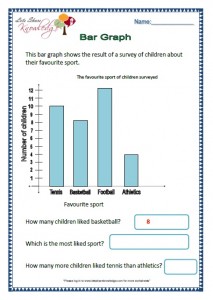
| Bar Graphs: Giving answers to questions based on bar graphs.
|
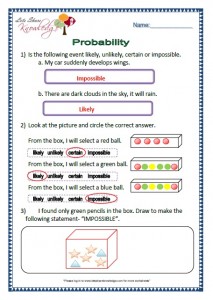
Probability: To find if the event is likely, unlikely, certain or impossible. Circling the correct answers and drawing based on the probability asked.
|
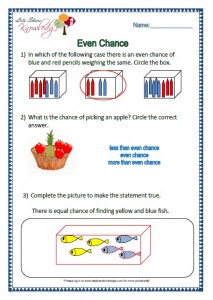
| Even Chance: Finding out about less than even chance, even chance and more than en chance of things in the questions asked. Completing pictures to make the statements true.
|
|